Choosing a kids clothing manufacturer for your U.S. brand involves more than comparing prices. Children’s garments demand careful attention to fit, materials, decoration, labeling, and production consistency. A supplier may produce an attractive sample yet still be a poor match for your planned size range or order volume.
Start with one defined product. Use this guide to shortlist suitable partners, evaluate samples and sizes, and agree on quality, documentation, and commercial terms before bulk production.
What Should You Check Before Choosing a Kids Clothing Manufacturer?
Before paying for development, use these seven checks to narrow your supplier shortlist:
- Product fit: Has the supplier made garments with a similar age range, fabric, and construction? Ask to examine a relevant sample or permitted production example.
- Service scope: Is the proposal for an existing blank, a modified factory style, or a garment developed from your design? Identify who supplies patterns and materials.
- Samples and sizes: What sample stages will be made, and how will fit be checked beyond the first sample size?
- Materials: Who sources the fabric and trims, and how will the production materials match what you approved?
- Production route: Where will your specific order be cut, sewn, decorated, and packed? Ask which steps go to outside contractors.
- U.S. market work: Who will identify applicable product requirements, arrange necessary testing, prepare labels, and keep the supporting records?
- Commercial control: What do the MOQ, unit price, development charges, delivery terms, quality checks, and defect remedies actually cover?
Record unanswered items and their owners before moving to sampling.
Build a Shortlist Around One Defined Product
Build your shortlist around the product you plan to launch, using the factory’s catalog only to check fit.
What to Include in Your First Manufacturer Inquiry
A supplier can assess a defined garment more reliably than a broad request for “children’s clothing.” In your first inquiry, share what is already decided and mark open choices clearly:
- Product: Garment type, intended age group, size range, and U.S. sales market.
- Design: Sketch or reference garment, fabric direction, colors, prints or embroidery, and branding.
- Commercial context: Estimated quantity by style and color, launch window, target customer, and price position.
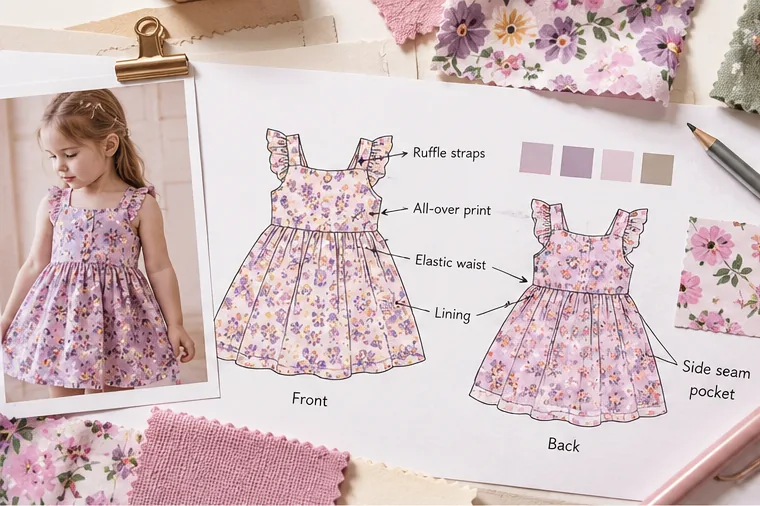
Brands contact us with different starting points: a finished tech pack, reference photo, sketch, or garment sample. We clarify open decisions on fabric weight, size grading, decoration placement, and colors. That tells us whether to develop patterns and samples or quote an approved specification.
Choose the Right Manufacturing Model
The terms OEM, ODM, private label, CMT, and full package describe different parts of a project. OEM and ODM usually concern the design’s starting point; CMT and full package describe production responsibilities. The terms can overlap, so ask each supplier to define its scope.
| Starting route | What you begin with | What to confirm before requesting a quote |
|---|---|---|
| Stock blank or decorated blank | An existing garment | Permitted decoration, label changes, available sizes, and whether the pattern can change at all |
| Private label or adapted factory style | A style the supplier already offers | Which fabric, fit, color, trim, and branding changes are allowed; who owns the underlying pattern |
| OEM development | Your design, specification, or approved reference | Who develops the pattern and grading; what files and samples you must provide |
| ODM development | A supplier design that you adapt | What you may modify and whether the adapted design is exclusive to your brand |
| CMT production | Materials and often a production-ready pattern supplied by the buyer | Who buys and checks fabric and trims; what the sewing contractor is responsible for |
| Full-package production | A defined product brief with an agreed development scope | Which sourcing, patterns, samples, production, labels, and packing are included |
A private label kids clothing manufacturer may offer more than one route. If you want a new neckline, custom fabric, and a different fit, a relabeled stock T-shirt may no longer be the right service. Resolve the service scope before comparing minimums or prices.
Where Can You Find Manufacturers for Your Product?
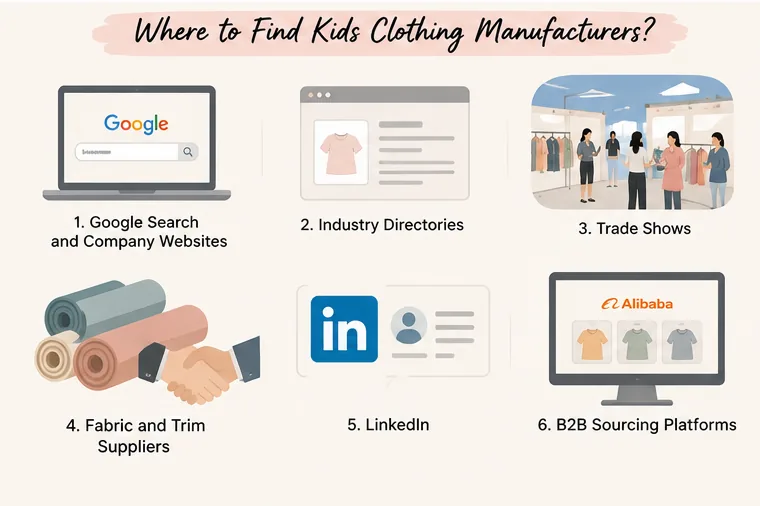
Six common channels can help you find potential children’s clothing manufacturers:
- Google search and manufacturer websites: Search by product category and buying intent, such as “custom kids clothing manufacturer” or “private label baby clothing manufacturer,” then review services and contact details.
- Apparel industry directories and associations: Use directories such as CFDA’s production resources to identify companies and check whether they work in your children’s age group.
- Apparel, textile, and sourcing trade shows: Meet prospective suppliers, review samples and materials, and learn how their production services work.
- Fabric and trim supplier referrals: Ask suppliers familiar with kidswear materials or decoration techniques for manufacturing referrals, particularly for specialized fabric or embroidery needs.
- LinkedIn and professional networks: Look for manufacturers and product-development contacts, then verify business details through official channels.
- B2B sourcing platforms: Collect leads through industry-specific or general procurement platforms, while checking whether each listing is a factory, trading company, or production coordinator.
Use the same product brief to compare promising leads from any channel. For a starting shortlist, see Shimmerella’s guide to ten kids clothing manufacturing partners for U.S. brands.
Screen a Kids Clothing Manufacturer Before Paying for Samples
A credible kidswear manufacturing partner should explain how it would develop and manufacture your specific style.
Check Experience With Your Product and Size Range
Ask to see a garment close to yours in fabric, construction, and age range. If a supplier mainly makes adult styles, ask who develops the children’s fit and reviews smaller sizes. A comparable sample and technical discussion reveal more than a catalog.
For girls’ dresses with sequins or beadwork, we check more than appearance. Placement near seams, attachment, fabric or lining against the skin, and care requirements affect comfort and construction. We review these details during material selection and sampling, before bulk production.
Client samples may be confidential. Ask for an in-house sample, an example the supplier is allowed to show, or a clear explanation of its development stages—not another brand’s private files.
Where Will Your Kids Clothing Actually Be Made?
A U.S. office helps with meetings and sample review, but it doesn’t identify your sewing facility. Samples and bulk garments may also come from different places. For your style, ask where these steps will occur:
- Development and sampling
- Fabric sourcing and cutting
- Sewing and finishing
- Printing or embroidery, final inspection, and packing
You may not learn a factory’s full network immediately. Still, request the proposed sewing country, any subcontracted stages, and the party responsible for the finished order. Record the route in the quote or purchase order, and reconfirm it if plans change after sample approval.
Origin also affects marketing. The FTC’s Made in USA guidance applies an “all or virtually all” standard to unqualified claims. Review the finished product and its components before making such a claim.
Check Material Sourcing and Consistency
“Cotton fleece” alone does not define the fiber blend, weight, construction, finish, shrinkage, or hand feel. Agree on a written material specification for fabric, rib, fasteners, labels, and decoration, and identify who approves substitutes. Check how the bulk materials will be matched to the approved sample.
Assess fabric and trims together; printing and sewing can change feel or performance. For certified or organic materials, check certificate scope, business, and validity. Fabric certification does not prove finished-garment compliance. Shimmerella’s fabric selection guide for kids clothing covers choices by use.
Who Handles Questions, Changes, and Approvals?
A useful supplier response identifies missing specifications and explains what could change price or timing. Name a technical contact, a sample-update owner, and a person authorized to approve changes. Keep decisions in a single version-controlled product file so sales, sampling, and sewing teams work from the same instructions.
Evaluate Kidswear Samples Before Bulk Production
The kidswear sampling process helps you verify what a supplier can actually produce, beyond its proposal.
What Does the Sampling Plan Include?
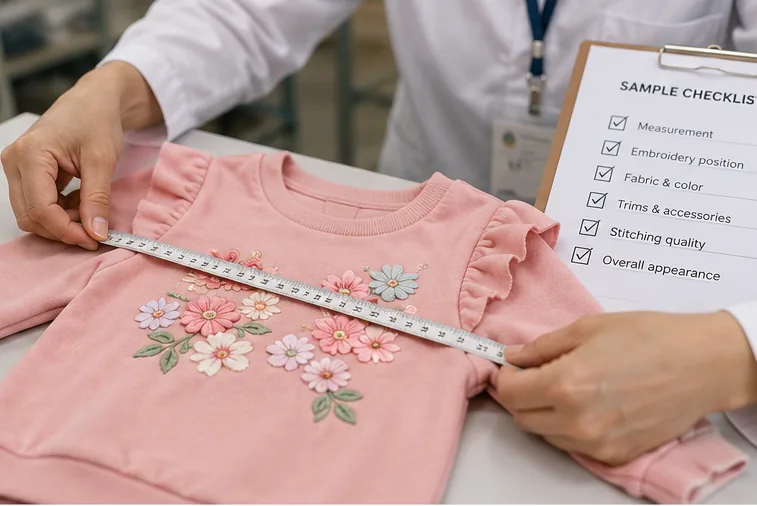
An early sample checks shape and construction; a fit sample checks measurements and comfort. A pre-production sample should reflect approved materials, decoration, labels, and sewing. Agree on purpose, cost, revisions, and approval timing for each stage. Review a physical garment when photos cannot establish feel or fit.
A sample photograph marked “looks good” is not a complete approval. When reviewing children’s sweatshirts, we record feedback by detail—embroidery placement, neckline and cuff recovery, and body and sleeve length against the agreed size chart. Any unresolved point stays on the revision list until it is confirmed.
Verify the Size Range, Not Just the Display Sample
A good 4T sample does not establish fit across sizes 2T–6T. Review base-size measurements, kidswear size grading, and tolerances. Decide which other sizes need physical checks. Check chest, body, sleeve, shoulder, and cuff measurements, specifying whether they apply before or after washing.
Confirm the quantity split by size in the quote and purchase order. The goal is to identify unverified fit points, especially at the ends of the range, rather than ordering every possible sample.
Check What the Manufacturer Can Customize
For custom children’s clothing, verify print or embroidery position, rib and trim selection, label placement, and retail packing. A label can affect comfort, while a packaging choice can change how a set reaches the store or warehouse. Record any separately approved branding files before production starts.
How Will the Approved Sample Control Bulk Production?
Assign the approved sample a version number and link it to the measurement chart, bill of materials, artwork, color references, and label files. Decide who keeps the physical sample and which record the factory will use during cutting, sewing, and inspection.
We distinguish appearance approval from production approval. A replacement fabric can look identical in photos yet change shrinkage, feel, embroidery, or testing. Before bulk use, we review its specification and affected approvals. That record also supports consistent reorders.
Confirm Readiness for Bulk Production
Before bulk production, settle the documentation, defect-handling process, and production schedule that the sample alone cannot establish.
Who Handles U.S. Testing and Product Documentation?
Treat “CPSIA compliant” as a prompt for product-specific questions. Identify intended age and use, materials, prints, trims, and sales market. Assign responsibility for applicable requirements, testing, report access, labels, and records supporting the finished order.
The CPSC explains that the domestic manufacturer or importer issues the Children’s Product Certificate for products requiring one, even when others help prepare it. Suppliers can provide evidence. The FTC also describes textile labeling requirements for fiber content, origin, business identity, and care.
Record decision owners and dates. If the garment changes after testing or label approval, reassess the evidence and wording. Shimmerella’s U.S. children’s clothing guide covers CPC, testing, and labeling questions in greater depth for your team and laboratory to review.
How Does the Factory Check and Resolve Defects?
Ask for a style-specific inspection plan based on the approved sample, not a blanket promise of “100% quality control.” For a children’s sweatshirt, the checks should cover:
- Incoming materials: Fleece, rib, and trims against approved specifications.
- Construction and fit: Seam quality and finished measurements against tolerances.
- Brand details: Embroidery, labels, and decoration placement against approved artwork.
- Final presentation: Garment appearance, size assortments, and packing.
Agree in advance who records defects, authorizes rework, and decides on acceptance or rejection. Safety and labeling concerns require a product-specific assessment; a cosmetic repair may not resolve them.
Can the Factory Deliver and Repeat Your Order?
A successful sample does not reserve children’s apparel production capacity. Request milestones for materials, approvals, sewing, inspection, and dispatch, including subcontracted work. For reorders, check fabric and trim availability and who approves substitutes. A style-specific schedule is more useful than a factory-wide capacity figure.
Compare Kidswear Manufacturing Quotes
Compare quotations on the same basis: the approved garment, quantity assumptions, and delivery destination.
Break Down the MOQ
Check whether the minimum is per order, style, or color, and whether sizes can mix. Fabric, embroidery, labels, and packaging may have separate minimums. If the MOQ is too high, ask whether stocked materials or fewer colors would help without compromising the design.
What Does Each Quote Include?
Send the same specification and estimated quantities to each supplier. Then compare the scope line by line. You can use a table like this in your own RFQ file:
| Quote item | Candidate manufacturer 1 | Candidate manufacturer 2 | Decision needed |
|---|---|---|---|
| Garment, fabric, size range, and color requirements | Are both pricing the same product? | ||
| MOQ and permitted size mix | What is the minimum per style or color? | ||
| Pattern, grading, samples, and revisions | What development work is separate? | ||
| Decoration, labels, and packaging | Are artwork setup and branded components included? | ||
| Testing support and inspection | Who pays, coordinates, and receives records? | ||
| Payment milestones and delivery terms | What is due before goods are released? | ||
| Freight, import costs, and defect remedies | What falls outside the factory price? |
Fill the table from actual quotes. A lower unit price may exclude work priced elsewhere. For imports, compare the cost of delivering the same approved garment to the same destination, including agreed delivery terms, freight, and applicable import costs. Show those costs separately from manufacturing.
Can the Production Schedule Meet Your Launch Date?
Work backward from the date you need sellable stock, allowing for samples, revisions, material approval, testing where applicable, production, inspection, and freight. Confirm when each stage begins: a quoted bulk lead time may start only after sample approval. Ask for an updated schedule if fabric, colors, or trims change.
Who Owns the Pattern and Artwork?
Before paying development fees, agree which patterns, grading files, measurement charts, artwork, and technical files you receive. Record file formats, reuse rights, and exclusivity. Terms vary for original designs, adapted supplier patterns, and stock blanks; “OEM” or “private label” does not establish ownership.
How Do You Choose Between Two or Three Manufacturers?
Use this decision table once shortlisted suppliers have responded and you have reviewed their sample plans or samples.
| Decision area | Evidence to request | Still unresolved? | Next action |
|---|---|---|---|
| Product and size capability | Comparable sample, proposed pattern and grading approach | Sample, clarify, or remove from shortlist | |
| Actual production route | Written country and process plan for this style | Confirm before making an origin claim or awarding bulk | |
| Materials and sample control | Approved material specification and change procedure | Confirm production-lot match | |
| U.S. market work | Named responsibility for testing, labels, and records | Resolve with responsible party and lab | |
| Bulk quality and capacity | Style-specific inspection and schedule plan | Agree acceptance and delivery milestones | |
| Full commercial scope | Comparable quote, MOQ basis, payment and delivery terms | Request a corrected quote |
If a small pilot is feasible, specify its acceptance criteria before ordering. The pilot should validate sample-to-bulk consistency, communication, inspection, and delivery—not merely produce a few finished garments.
What Are the Red Flags When Choosing a Kids Clothing Manufacturer?
These warning signs deserve a written explanation before you release a purchase order:
| Signal | What remains unclear | Ask next |
|---|---|---|
| The portfolio is broad, but there is no comparable garment | Whether the team has handled your construction and age range | “Can you show a permitted sample or explain the pattern and sewing approach for this style?” |
| Only one attractive sample size has been checked | How fit will work at the ends of the range | “Which sizes will you review physically, and what measurement chart controls the others?” |
| The MOQ changes without a stated basis | Whether fabric, color, trim, or line setup drives the minimum | “Please show the minimum for each style, color, and material choice.” |
| The supplier says every product is “compliant” | Which rules and records apply to the finished garment | “Who identifies the requirements, arranges testing, and holds the reports for this style?” |
| The company has a U.S. address but no order-specific sewing plan | Where the garment will actually be made | “What country and facility route are proposed for bulk production?” |
| A material can be substituted without written approval | Whether bulk will match the approved sample | “What review is required before you change this fabric or trim?” |
| A low quote has no exclusions or remedy terms | What the buyer will pay for and what happens if goods fail | “Please itemize development, testing, packing, delivery, and defect handling.” |
An unclear answer may be resolved with revised documents. If scope and accountability remain undefined, do not treat the quote as ready for approval.
Frequently Asked Questions
Quick answers to common sourcing questions:
Do I need a finished tech pack before contacting a manufacturer?
No. A sketch, reference garment, target size range, material direction, and quantity estimate can start a feasibility discussion. A reliable production quotation needs a more settled specification. Ask the manufacturer which details it can develop with you and which it expects you to supply before it prices the order.
Is a U.S.-based manufacturer the same as a Made-in-USA manufacturer?
No. A U.S.-based team can develop or manage a garment sewn elsewhere. Confirm the production country and components for the specific order before making a U.S.-origin claim. The FTC explains the standard for unqualified Made in USA claims.
Is the lowest MOQ the best choice for a first collection?
It depends on what the minimum covers. A smaller order reduces initial inventory but may limit materials, customization, or size mix and raise unit cost. Compare sample quality, the full quote, and repeat-order options before choosing on quantity alone.
Can a manufacturer handle both babywear and older kids’ sizes?
Some can, but ask a baby clothing manufacturer for relevant experience with each age group. A baby romper and a youth sweatshirt have different patterns, openings, trims, and fit decisions. Ask for comparable work and a grading plan for the range you intend to sell.
Who is responsible for the CPC on an imported children’s garment?
For a product requiring a CPC, the CPSC says the importer issues it, even when a foreign factory or laboratory assists. Agree on access to samples, test reports, and records early. Requirements depend on the finished product and its intended use.
Send a Specific Kidswear Brief
Shimmerella provides U.S.-based development support and draws on its understanding of American kidswear preferences, age groups, and seasonal trends to help brands plan collections for the U.S. market.
Share your product type, sizes, reference or tech pack, materials, estimated quantity, and launch plan through our contact page. We can discuss development, samples, and the proposed production route for your style.
Still comparing suppliers? Use our guide to ten kids clothing manufacturing partners alongside the checks above.