
Children’s clothes made in the USA can make sample reviews, production checks, and reorders easier for a kidswear brand to coordinate. The benefit depends on whether the factory can make your style, source the right materials, and meet your budget and launch date.
When deciding where to manufacture children’s clothing, look at how an order will move from samples to finished stock. A useful production arrangement helps you refine fit, keep garments consistent with the approved sample, and reorder the sizes customers need.
Children’s Clothes Made in the USA: What Brands Gain
The value of U.S. kidswear manufacturing depends on what your collection needs. Use the following points to compare the factory’s offer with your sampling, quality, and replenishment plans.
| Potential advantage | When it matters to a kidswear brand | What to verify |
|---|---|---|
| Closer sample review | Fit or garment details may need several revisions | Where samples are made and who can approve changes |
| More direct production oversight | Bulk garments must match an approved sample across sizes | Inspection stages, records, and subcontracted work |
| More responsive replenishment | Sales reveal unexpected demand by size or style | Material availability, capacity, and reorder minimums |
| A substantiated U.S.-origin story | Country of origin is part of the brand’s positioning | Fabric origin, manufacturing steps, and label wording |
Kids’ clothing makes those decisions especially visible. A size range covers changing body proportions, not merely scaled copies of one garment. A summer dress that arrives after the selling window or a sweatshirt with the wrong size mix can leave a brand holding inventory it cannot easily move.
Before choosing a factory, check whether your fabric is ready to use and when production can start. Those two answers help you plan the launch and decide how much room you will have for later reorders.
Sampling and Fit: Where Proximity Helps Most
A nearby production team can make it easier to review a physical sample and discuss changes together. Use that access to agree on fit, materials, and construction before the full order begins.
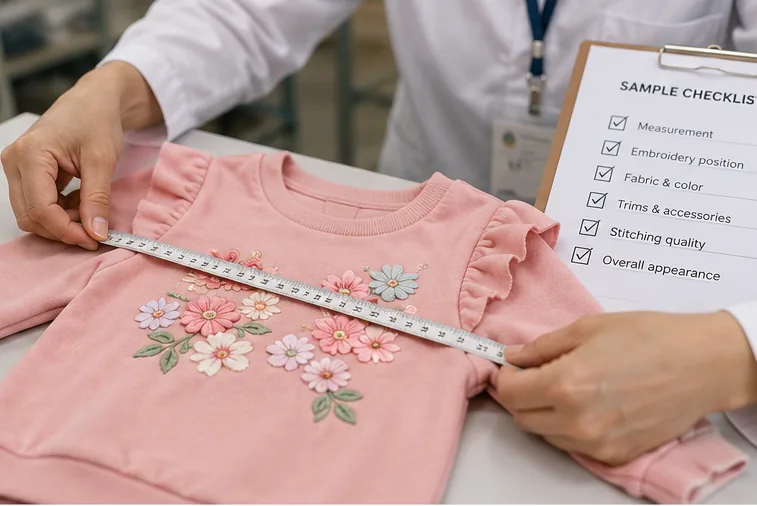
Review Samples Against a Size Specification
“Make the fit better” gives a pattern maker little to work with. Record the garment size, fit model, measurements that missed their targets, and the requested changes. For a children’s top, check the neck opening, chest width, body and sleeve length, and cuff recovery.
Check the base size and both ends of the range. A 4T sample can look right while a smaller neckline is difficult to pull over a child’s head or a larger sleeve grades out of proportion. Decide which sizes need physical samples and record measurement tolerances before bulk approval.
For a first collection, our recommendation at Shimmerella is to perfect a few core styles before adding more designs. Spend the early development budget on comfortable neck openings, consistent sizing, and fabric that performs after washing. Confirm how many sample rounds the quote includes.
Keep the Approved Sample Connected to Bulk Production
Before approving a sample, record the details the factory will need to reproduce it. Keep the garment together with these files:
- Measurement chart and grading rules: Identify the approved dimensions, size range, and tolerances.
- Bill of materials: Record fabric, rib, lining, closures, trims, and approved substitutes.
- Artwork and branding files: Fix print or embroidery placement, label content, and packing details.
- Approval record: Give the sample a version identifier and record who approved it and when.
When changing a rib cuff, compare its stretch and recovery with the approved material and check it again after washing. Record the replacement material and obtain written approval before cutting, so the factory and brand are working from the same version.
Production Oversight and Replenishment
Agree on checks while there is still time to make corrections. A local visit or a review of early production can help the brand compare garments with the approved sample before the full order is complete.
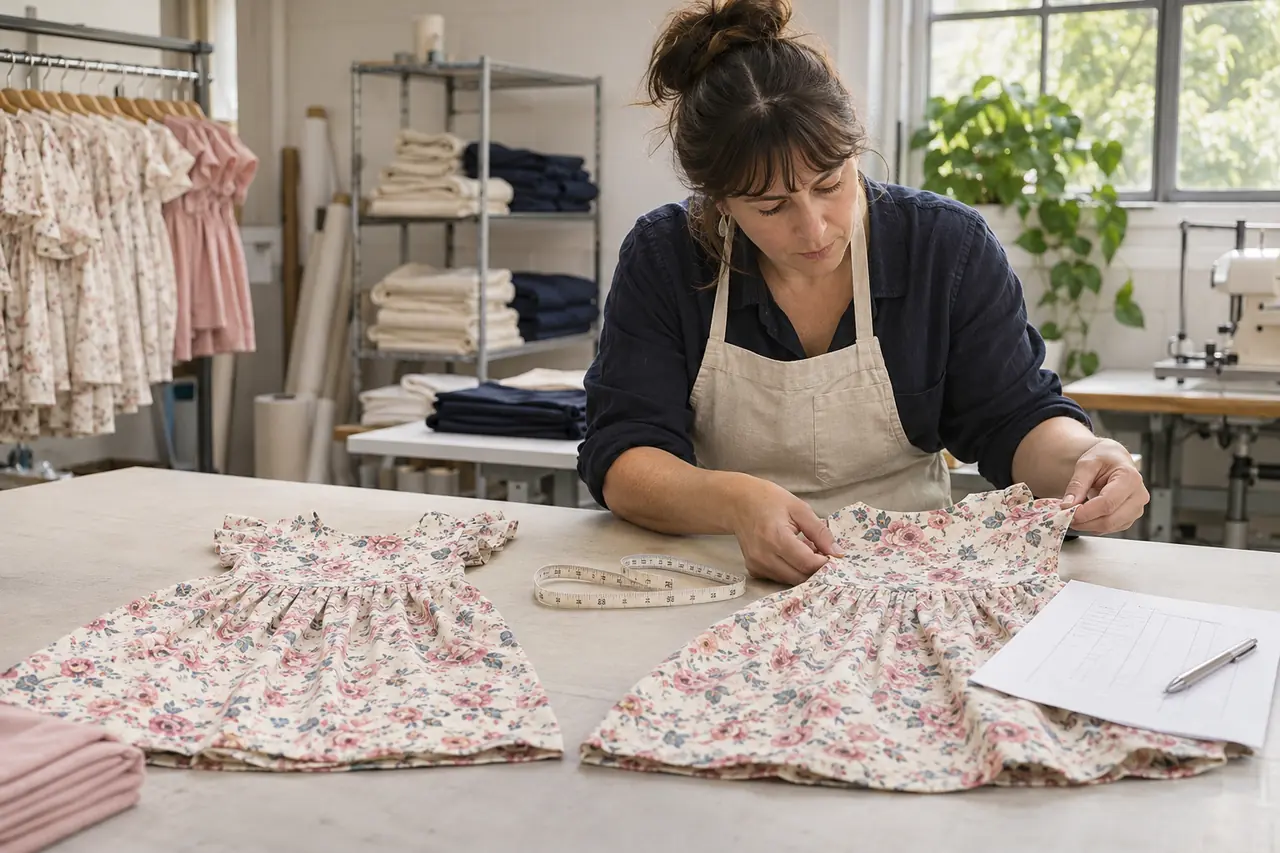
Inspect Workmanship and Track Changes
Agree on checks that fit the garment. A dress with embroidery needs different inspection points from a printed cotton T-shirt. For each style, review incoming materials, a first completed garment, in-process measurements, decoration placement, and the final size assortment. Record any correction and the units affected.
The value of closer access is being able to review work and resolve questions during production. Agree on the quality standard, the inspection stages, and who can approve corrections. When materials or construction change, check whether earlier approvals or required tests still cover the revised garment.
Keep batch records that connect finished garments to their production dates, materials, and manufacturing details. These records help the team identify the stock involved when a customer raises a concern after delivery.
Plan Reorders Around Real Size and Style Demand
Different sizes and colors can sell at different rates. A workable reorder arrangement gives a brand a way to adjust the size mix as actual demand becomes clearer.
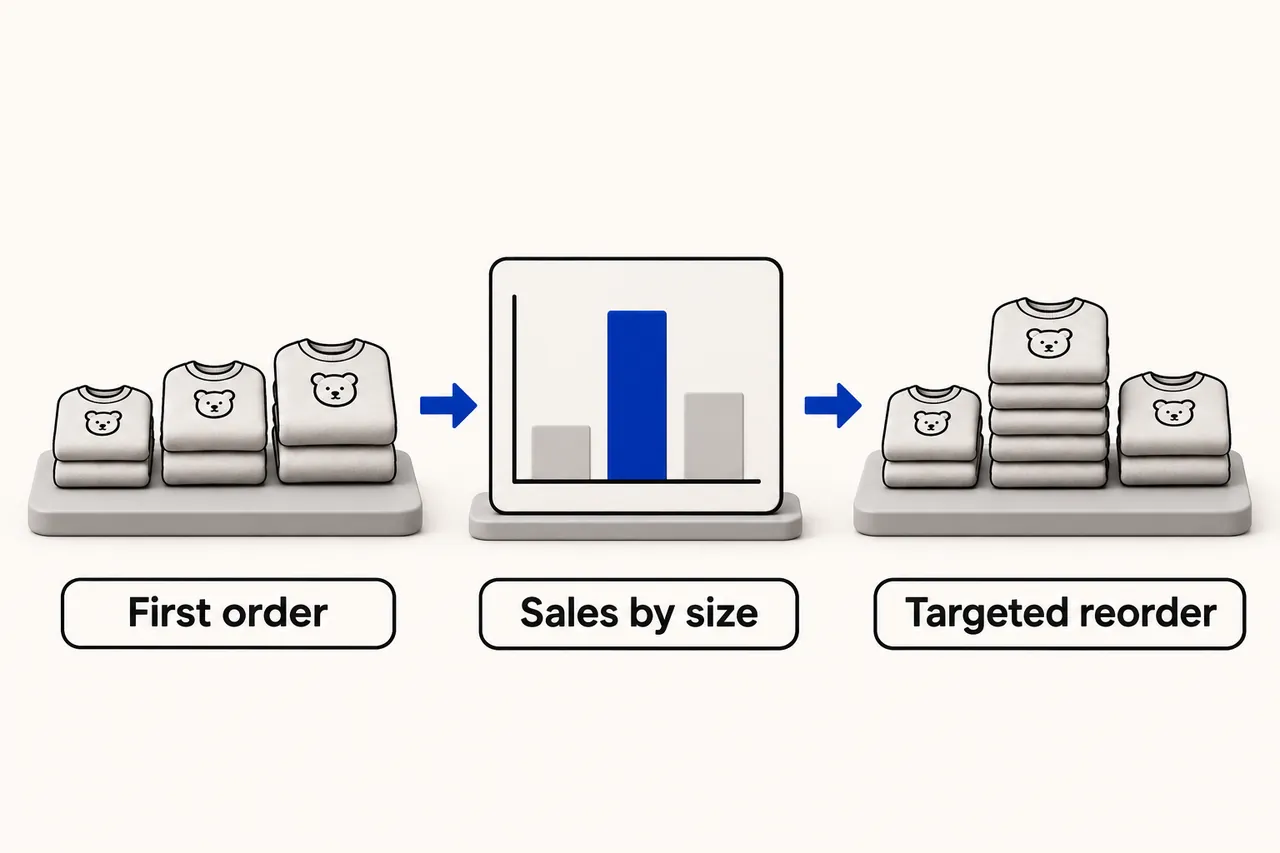
Plan the first order and reorders together. Confirm whether the factory can remake only the sizes that sell out, whether the original fabric will remain available, and what minimum and production time apply. These answers shape your launch quantity and replenishment plan.
For seasonal kidswear, work backward from the date stock must be ready for sale. Include sample approval, material purchase, testing when required, cutting, sewing, inspection, and delivery. Leave room for any material that needs to be ordered again or a production slot that must be reserved.
What “Made in the USA” Actually Means for Kidswear
An American company, a U.S. showroom, and a U.S. shipping address each describe a different fact from a garment’s origin. Brands should establish the location of the actual production steps and the source of important materials before writing an origin claim on a label or product page.
| Wording a buyer might see | What it communicates | What the brand still needs to establish |
|---|---|---|
| Designed in the USA | Design work occurred in the U.S. | Where the garment and materials were made |
| Ships from the USA | The parcel leaves a U.S. location | Where the garment was manufactured |
| Cut and sewn in the USA | Those named processes occurred domestically | Where the fabric and other significant inputs came from |
| Made in the USA | A broad U.S.-origin claim | Whether the finished product supports that unqualified claim |
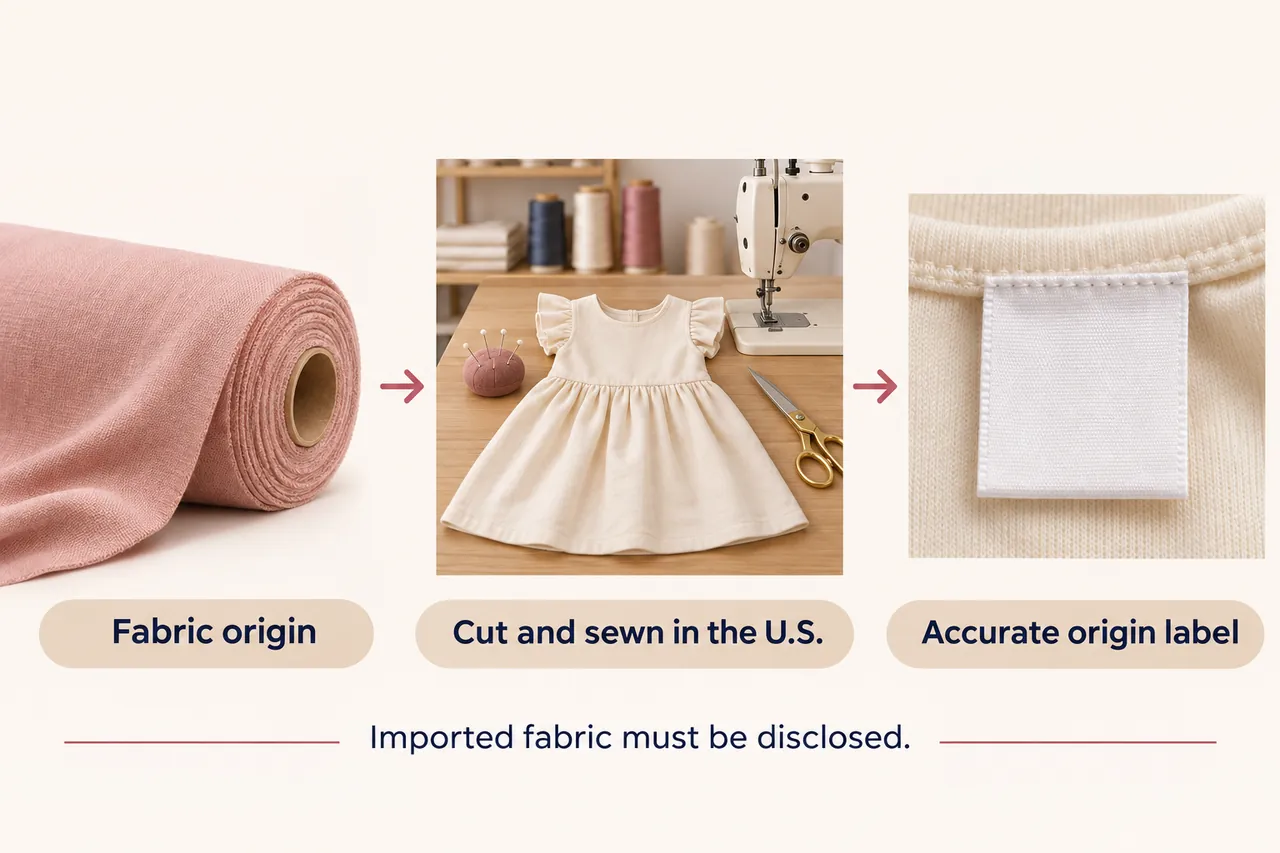
The FTC’s country-of-origin guide says a U.S.-made garment using imported fabric needs wording that identifies the imported material. One example is “Made in U.S.A. of imported fabric.” Match the statement to each product’s materials and manufacturing steps.
Children’s clothing must meet the safety rules applicable to each product. For U.S.-manufactured items requiring a Children’s Product Certificate (CPC), the CPSC identifies the domestic manufacturer as responsible for issuing it. Address testing and tracking information alongside labels. Our U.S. kidswear compliance guide covers the details.
Costs and Constraints Brands Should Compare
In the 2026 USFIA Fashion Industry Benchmarking Study, nearly 90% of respondents expected their sourcing costs to rise in 2026. The survey covered executives from 30 U.S. fashion companies, mainly large businesses, and provides context across the apparel industry.
For children’s clothes made in the USA, compare quotes against the same garment, quantity, and delivery destination offered by other factories. Include development, production, packaging, and delivery in the budget so you can see the total commitment each option requires.
| Cost or constraint | Question to put to each manufacturing option |
|---|---|
| Development | What do patterns, grading, samples, and revisions cost? |
| Unit production | What fabric, construction, decoration, labels, and inspection are included? |
| Materials | Are the chosen fabric and trims available in the required quantity and on the required schedule? |
| Delivery | What freight, handling, and, where applicable, import costs reach the agreed destination? |
| Inventory | What stock must be committed before the brand can see actual demand? |
| Reorders | What are the minimum, material lead time, and available production slots? |
Check that the factory has suitable equipment and can obtain your chosen fabric within the budget and schedule. Fabric and decoration suppliers may also set minimum quantities that affect the size and cost of the order.
For a new kidswear brand, reserve part of the budget for reorders and further development. A lower unit price tied to a larger minimum may require more inventory than you can sell during the season. Compare each production option by total cash commitment, not unit price alone.
Is U.S. Production Right for Your Kidswear Brand?
The same 2026 USFIA study reported that about 56% of respondents sourced from the United States. For all of those companies, U.S. sourcing accounted for less than 10% of their total sourcing value or volume.
Assess production routes style by style. A new fit may benefit from easier sample reviews and revisions. An established basic may place more weight on unit cost, dependable delivery, and repeat supply. Use the table below to identify the most useful questions for your collection.
| Your situation | Why U.S. production may help | What to check before deciding |
|---|---|---|
| A first collection with an unproven size mix | Sample review and later assortment decisions may be easier to coordinate | Sample stages, first-order MOQ, and reorder terms |
| A style with complex fit or decoration | Changes can be reviewed against the physical garment and production records | Relevant experience, equipment, and how changes are approved |
| A short seasonal selling window | A shorter supply chain may leave more time for sales-informed decisions | Material availability and a confirmed production slot |
| A brand built around U.S. origin | Domestic production can support a documented origin story | Fabric and component sourcing, manufacturing steps, and label wording |
| A stable, price-sensitive high-volume basic | Domestic production may still be viable, but unit cost carries more weight | Comparable quotes for the same specification and destination |
Before placing an order, ask which steps the factory handles itself and where any subcontracted work takes place. Use our manufacturer selection guide to compare suppliers alongside your product requirements and budget.
Shimmerella is based in Texas, with a New York showroom and U.S.-based support for custom kidswear development. If children’s clothes made in the USA are part of your plan, share your style, sizes, fabric, quantity, and launch date through our contact page. Explore our custom kidswear services for more information.
Frequently Asked Questions
Here are a few common questions brands ask when choosing a factory, reviewing samples, and planning production.
Can children’s clothes made in the USA use imported fabric?
Yes. When clothes are made in the U.S. using imported fabric, the origin wording should make that clear. The FTC gives “Made in U.S.A. of imported fabric” as one example. Check the fabric source and where the garment is made before approving the label.
Does U.S. production mean children’s clothes meet safety requirements?
The requirements still need to be checked for the particular garment. Materials, trims, and the intended age group affect which rules apply. For products that require a Children’s Product Certificate (CPC), the domestic manufacturer is responsible for issuing it; the applicable testing and tracking requirements also need to be addressed.
Can I start with a small order?
Some factories accept small orders, depending on the style and materials. Share your planned quantity and size mix, then ask whether the minimum is set by style, color, or fabric. Confirm whether you can include several sizes in that quantity before planning your first collection.
What should I prepare before requesting a quote or samples?
Share design sketches or reference images, the intended ages and sizes, fabric preferences, estimated quantity, and planned launch date. If you already have a reference garment or measurements, include those too. This gives the factory a clearer starting point for discussing samples and pricing.
Can I approve a sample before the full order is made?
Agree on a sample approval stage before placing the production order. Use the sample to check fit, fabric, workmanship, colors, and labels, and put any requested changes in writing. Confirm the final version before the factory starts the full run.
What costs should I check before placing an order?
Alongside the price per garment, check whether sampling, patterns, size adjustments, labels, required testing, packaging, and delivery are included. Ask for these costs in the same quote. When comparing factories, use the same style, quantity, and delivery destination so you can compare the total budget.
How long does it take to make children’s clothes in the USA?
Ask the factory for separate estimates for sampling, production, and delivery. Fabric preparation, sample changes, any required testing, and the factory’s schedule all affect the timing. Share your planned launch date early so the team can work backward from when you need the stock.
Can I reorder only the sizes that sell out?
Ask the factory whether it can make another batch in just the sizes you need. The answer will depend on available fabric, reorder minimums, and the production schedule. Discuss these points with the first order so you know how to request a refill later.