Custom kids’ pajama manufacturers in the USA can be found through the CFDA Production Directory, Thomasnet, Maker’s Row, targeted searches, apparel trade events, and industry referrals. First decide whether your pajamas must be made in the United States or whether a U.S.-based development partner may arrange production elsewhere. That decision shapes which suppliers to contact and what you need to verify.
For a brand planning its first sleepwear collection, start with U.S. production directories, targeted searches, and apparel trade events. Then confirm each supplier’s experience with children’s sleepwear, where your order will be cut and sewn, and how samples, testing, and labels will be handled. This guide shows you how to make that shortlist and turn it into an approved production plan.
7 Places to Find Kids’ Pajama Manufacturers
No single directory will tell you everything about a factory. The most useful approach is to find candidates in several places, then ask the same production questions before requesting a quote.
| Sourcing channel | Where to look | Best use |
|---|---|---|
| CFDA Production Directory | U.S. apparel production listings | Discover domestic factories and development services |
| Thomasnet | Sleepwear and contract-manufacturing categories | Filter potential manufacturers and distributors by location and business type |
| Maker’s Row | U.S. apparel production and sample-making listings | Find pattern, sampling, and cut-and-sew partners |
| Targeted Google searches | Product- and location-specific searches | Find independent factory sites and compare service details |
| Apparel trade events | SOURCING by Informa exhibitor resources and other industry events | Ask production teams about actual capabilities in person |
| Industry contacts and LinkedIn | Fabric suppliers, product developers, company teams | Find referrals and identify who manages production |
| Global B2B platforms | Alibaba, Global Sources, Made-in-China.com | Expand the search if production outside the U.S. is acceptable |
Start with U.S. production directories
If domestic sewing is a requirement, begin with the CFDA Production Directory, Thomasnet, and Maker’s Row rather than a worldwide supplier marketplace. Search for children’s, sleepwear, knitwear, sample making, and cut and sew. A general clothing factory may be able to sew a pajama set but may not have experience with the sizing and safety requirements of children’s sleepwear.
When a directory profile lists children’s clothing or sleepwear, look beyond the category tag. Check whether the business offers pattern development, size grading, samples, cutting, and repeat production. Some studios handle only development, so ask who would sew the bulk order and where that work would take place. Request examples of comparable sleepwear and confirm the proposed production arrangement before adding the company to your shortlist.
A directory listing helps you find a contact; it does not replace verifying the factory or its experience with children’s sleepwear.
Search by product and production service
Broad searches such as “pajama supplier” often bring up retail stock, wholesalers, and factories serving different countries. Narrow the wording to match the work you need. Useful starting queries include:
custom children's sleepwear manufacturer USAkids pajama cut and sew factory Californiaprivate label kids pajamas pattern making and sampling
On each candidate’s website, look for a production process, comparable products, contact details, and evidence of sampling and repeat manufacturing. A supplier that can apply your label to an existing set is offering something different from a factory that can develop your own pattern and fit.
Trade events and referrals help fill the gaps. Ask fabric or trim suppliers whether they know factories experienced in children’s sleepwear. When meeting a prospective partner, bring a short product brief and ask who actually develops and makes the garments.
Use global platforms only when they fit your location needs
Alibaba, Global Sources, and Made-in-China.com can broaden your supplier options, especially if you are open to overseas production. However, a U.S. address, U.S. customer list, or U.S. shipping warehouse does not establish domestic manufacture. Confirm the production location for your order before adding a company to a Made in USA shortlist.
How to Choose the Right Type of Pajama Supplier
Custom kids’ pajama manufacturers in the USA can offer different production arrangements. Before comparing companies, decide how much of the pajama design you want to control and how much development work your team can provide.
| Supplier model | What you are buying | Best for |
|---|---|---|
| Ready-stock wholesaler | Existing pajamas with little or no product development | Resale inventory, not an original collection |
| Private-label base style | An existing pattern with agreed changes to prints, colors, labels, or trims | Brands wanting limited customization |
| Full custom / OEM–ODM partner | Development from a brief or tech pack, followed by sampling and production coordination | Original fit, prints, and brand-specific details |
| Cut-and-sew contractor | Sewing to buyer-supplied patterns and specifications, sometimes with buyer-supplied fabric | Brands with their own development and sourcing team |
For an original sleepwear line, ask who owns the final pattern, develops the size range, sources production fabric, approves print placement, and resolves defects. The contract should also identify the sewing factory and any subcontracted work.
Decide on production location early. If you need an unqualified Made in USA claim, obtain a written account of the significant manufacturing steps and material origins for the finished garment. The FTC’s Made in USA guidance uses an “all or virtually all” standard for unqualified claims. A U.S. showroom or design office is not enough by itself. Some projects may support a more specific, qualified origin statement, but it must also be accurate.
Check Experience with Children’s Sleepwear
Pajamas are not simply soft T-shirts and pants sold as a set. A factory needs to understand the garment’s intended use, children’s size range, construction, and the rules that apply in the destination market. This is where a good supplier shortlist becomes much smaller.
Confirm the applicable U.S. sleepwear requirements
The CPSC explains that the children’s sleepwear standards appear in 16 CFR Parts 1615 and 1616, generally covering sleepwear in sizes 0 through 14. Qualifying infant garments and tight-fitting sleepwear follow different requirements under these standards, but they are still subject to applicable clothing-textile flammability rules. The intended use, measurements, construction, and required labels matter—not just the fabric name. See the CPSC children’s sleepwear guidance.
This distinction should be decided during design, not after the final sample. For example, widening the body or changing a cuff on a proposed tight-fitting style may mean the original specification and compliance plan need another review. Cotton is not an automatic exemption, and a general fabric certificate does not establish the compliance of every finished pajama style.
Ask each candidate how it coordinates the correct test plan, approved laboratory, sample identification, tracking information, and labels. Where a Children’s Product Certificate (CPC) is required, the responsible U.S. domestic manufacturer or importer issues it based on the required test evidence; a laboratory does not issue the CPC on the brand’s behalf. For more detail, see our U.S. kidswear compliance guide.
Look beyond the fabric swatch
For a two-piece pajama set, check the neck opening, sleeve and leg lengths, waistband, cuffs, and seam placement. Ask how the factory checks the smallest and largest sizes, not just the middle size. For printed sets, also confirm the pattern scale, placement, color variation, and how the print behaves after the intended wash method.
In children’s clothing development, we would rather settle a neckline or waistband issue in sampling than accept an attractive sample that is hard for a child to wear. That is why the approved measurement chart and finished sample should travel together into bulk production. If your selected fabric, dye, trim, or print changes, review the effect on fit, care, testing, and labeling before proceeding. Our kidswear fabric guide explains more about fabric construction and sample checks.
Shortlist Manufacturers and Compare Quotes
A strong shortlist does not need dozens of names. It needs candidates who can explain how they will make your specific pajamas. Use the same questions and specifications for every company so that a cheaper quote does not hide missing development work or a different fabric.
Verify Custom Kids’ Pajama Manufacturers in the USA
Use this short screening sheet when you contact a manufacturer:
| Check | Ask the supplier | Evidence to request |
|---|---|---|
| Production site | Where will this order be cut, sewn, and finished? | Named facility and planned subcontractors |
| Sleepwear experience | Which children’s pajama styles and sizes have you worked on? | Comparable work and relevant production process |
| Product development | Who handles pattern making, grading, and revisions? | Sample stages and version-control method |
| Safety responsibilities | Who confirms applicable requirements and coordinates testing? | Written test and label responsibility plan |
| MOQ and capacity | What is the minimum per style, print, color, or fabric? | Written quantity breakdown and production window |
| Bulk consistency | How will the approved sample guide production? | First-unit checks, tolerances, and change approval |
Take care with examples that prove only part of the answer. A factory tour may demonstrate machinery and staffing, but not a particular sleepwear design’s compliance. A test report may cover one material or style, not everything the factory sells. Ask what the evidence actually covers.
Send every supplier the same brief
You do not need a finished tech pack to start a conversation. A sketch or reference garment can be enough for initial development discussions. Before requesting a firm quote, however, bring the details into one current document:
- Pajama type, target ages and size range, with a draft size chart if available
- Fabric composition and weight, fit direction, print or decoration, cuffs and waistband
- Quantities by style, color, print, and size; expected reorder needs
- Main labels, care information, packaging, and destination market
- Required production location, warehouse arrival date, and target budget
- Open decisions that the supplier must propose or price separately
Ask suppliers to break out pattern making, samples and revisions, print setup, fabric minimums, bulk sewing, tests, labels, packing, freight, and any applicable import costs. Compare the total money committed, not just price per set. A lower unit price may come with a large print minimum or extra work that a second supplier already includes.
Our preference for a first pajama collection is to confirm one repeatable core style before adding too many prints. It makes development, sizing, and replenishment easier to manage—and it reduces the chance of tying the entire budget to a design that has not yet been tested in the market.
Review and Approve Pajama Samples
The most important transition is from a good-looking sample to a bulk order made from the same approved details. Treat the physical pajama set and written specification as one production reference.
Review fit, comfort, and the actual materials
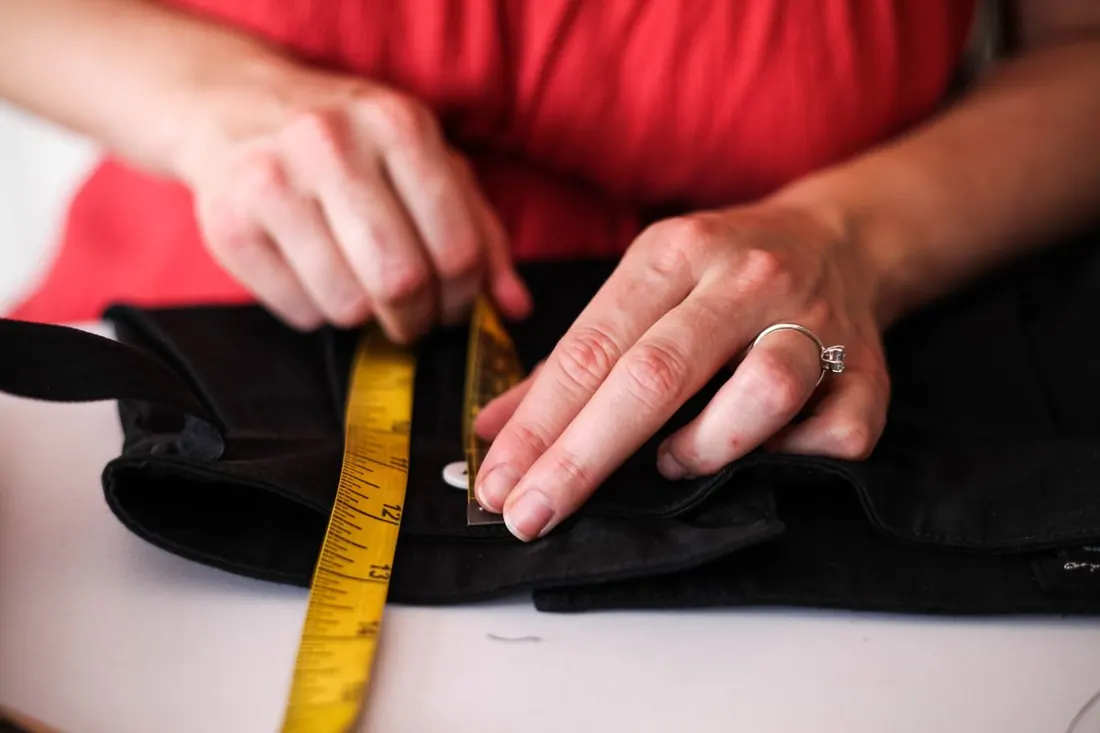
Inspect a sample in the intended sizes. Check neck and leg openings, movement, seam feel, cuff and waistband recovery, print placement, stitching, and labels. Follow the proposed care method and record any changes in dimensions, twisting, surface appearance, or color. Record findings rather than assuming that one successful sample proves how every production batch will behave.
For a tight-fitting design, measurement and labeling checks should follow the applicable requirements—not a subjective judgment that it looks snug. Keep the fabric and testing decisions connected to the final style, including the approved production print and trims.
Keep the bulk order tied to the approved sample
Before bulk cutting, agree on the final sample version, measurement tolerances, fabric and trim references, artwork files, approved labels, and permitted substitutions. Compare the first units made with actual production materials against that reference. Review small and large sizes where fit or print placement could change.
How Shimmerella Supports Custom Kids’ Pajama Brands
Before you place a production order, it helps to know what a development partner can take care of beyond sewing. Shimmerella is a U.S.-based kidswear company with a presence in Texas and a showroom in New York. We support clothing brands, boutiques, and online retailers through OEM, ODM, and private-label development, with a focus on creating pajamas around their own designs rather than selling ready-made stock.
You can start with a tech pack, a reference pajama set, or an early design idea. Our team helps work through fabrics, age-specific sizing, neck openings, cuffs, waistbands, prints, labels, and packaging. We then review and refine samples with you so the approved details can guide production. If you are planning coordinated styles or holiday prints, we can also help shape them into a consistent collection.
Learn more about Shimmerella’s custom kids’ pajama services. Once the style and sample are agreed, you can turn those decisions into a clear first-order plan.
Plan Your First Pajama Production Order
An approved sample is the start of a manufacturing agreement, not the end of your work. Make sure the purchase order explains exactly what to produce, who can approve changes, and what must be checked before shipment.
- Approve the production reference: Identify the final sample, size chart, materials, print files, labels, packaging, and tolerances.
- Confirm quantity and cost: Record sizes, colors, prints, MOQ, payment milestones, and delivery terms.
- Assign compliance responsibilities: Agree who arranges testing, retains records, issues any required CPC, and approves labels.
- Set quality checkpoints: Specify first-unit checks, in-process inspections, final inspection, and how changes are authorized.
- Work backward from warehouse arrival: Allow time for sample revisions, materials, testing, sewing, inspection, and shipping.
For seasonal prints, ask whether fabric can be reproduced if one size sells quickly. We would not automatically reorder a holiday style just because initial sales were strong. If the new stock arrives after the holiday, it may be difficult to sell at the planned price.
When you are ready to move forward, share your pajama brief with our team—including the style, age range, estimated quantity, and target warehouse date. We can discuss the next sampling and production steps for your project.
Frequently Asked Questions
These are the questions worth settling before committing to a pajama factory or approving a first production run.
1. Where can I find kids’ pajama manufacturers that sew in the USA?
Start with the CFDA Production Directory, Thomasnet, Maker’s Row, and targeted cut-and-sew searches. Shortlist companies with children’s sleepwear experience, then confirm the facility that will cut and sew your order. Directory presence alone does not establish manufacturing location or capability.
2. Can a U.S.-based company manufacture my pajamas overseas?
Yes. Some companies provide U.S.-based design or account support while arranging production elsewhere. Ask where each major operation will happen. If your brand needs a Made in USA claim, verify the actual garment and material origins before approving product labels.
3. Do I need a finished tech pack to contact a pajama manufacturer?
No. A sketch, reference set, and short product brief are enough to begin discussing development. Before samples or bulk production are approved, make sure fabric, fit, sizes, print, labels, and construction are documented in a version everyone can identify.
4. What affects the MOQ for custom kids’ pajamas?
Minimums can depend on the factory, fabric, color, print setup, size distribution, and packaging. Ask whether the minimum applies per design, fabric, print, or full order. Check material minimums separately from the number of finished sets.
5. Are cotton children’s pajamas exempt from flammability requirements?
No. The applicable rules depend on the finished garment’s intended use, sizing, measurements, and design. Qualifying infant garments and tight-fitting sleepwear have specific conditions and still fall under applicable clothing-textile flammability requirements. Determine the appropriate route before finalizing the style.
6. What should I check when reviewing pajama samples?
Review fit across the size range, neck openings, cuffs, waistbands, seams, prints, and the results of the intended wash or care method. Compare the actual materials and sample measurements with the approved specifications, and record any revisions before bulk production.
7. How should I compare two pajama manufacturing quotes?
Send both suppliers the same brief. Compare fabric, development and sample fees, print setup, MOQ, testing, labels, freight, and delivery terms alongside the unit price. Ask them to identify missing items and assumptions in writing.
8. How early should I start a custom holiday pajama collection?
Work backward from the date inventory must reach your warehouse. Include design, samples, print approvals, compliance work, production, inspection, and delivery. Ask for a schedule based on your actual materials and quantity, and discuss reorder availability before placing the first order.