A great-looking sample is only the beginning. If a neckline feels too tight, a print shifts across sizes, or a fabric changes after washing, those small details can become expensive problems once the full order is made.
For kidswear brands, children’s clothing OEM production is about more than asking a factory to sew a design. The finished clothes need to match your expectations for comfort, fit, and quality—not just in one sample, but across the sizes you plan to sell. Catching problems early makes them much easier to fix.
What Is OEM in Children’s Clothing?
OEM (Original Equipment Manufacturing) means a factory makes clothes based on your design and agreed requirements. You decide what the product should be; the manufacturing team helps turn those instructions into garments that can be made consistently. You can begin with a complete tech pack, a reference garment, or a sketch that still needs development work.
OEM is different from ODM and private label. With ODM, the supplier takes a larger role in developing the design. Private label may involve adding your branding to an existing garment or to a style developed for your collection. The labels alone don’t tell you who owns the pattern, chooses the fabric, or pays for revisions—those responsibilities should be agreed in advance.
For example, printing your logo on an existing T-shirt is a very different project from creating a new T-shirt with its own neckline, fit, and fabric. Both may be sold under your brand, but they need different samples, approvals, and budgets. You can explore the options through Shimmerella’s OEM, ODM, and private-label services.
What Makes OEM Production for Kids’ Clothing Different?
Children’s clothing has to work for growing bodies and everyday movement. A neckline that fits a seven-year-old may be difficult for a toddler to pull over their head. A print that looks balanced on the middle size may sit too low on the smallest one. That is why fit across the full size range matters as much as a good-looking sample.
We recommend giving everyday use as much attention as appearance. Can a child raise their arms comfortably? Will the waistband stay in place when they sit? Could the back of an embroidered design rub against the skin? These questions can reveal problems before they become part of hundreds of garments.
The garment’s intended use and sales market also affect the design. For instance, children’s sleepwear sold in the U.S. may follow different flammability requirements from an everyday T-shirt. The CPSC’s current children’s sleepwear guidance explains how the applicable route depends on the garment, size, fit, and intended use. Identify the category before finalizing fabric, patterns, or labels. The FTC’s apparel-labeling guidance also covers fiber, origin, responsible-business, and care-label information for relevant clothing products.
Children’s Clothing OEM Production: The 7 Steps
The seven steps below take you from an initial design to a checked, packed order. Each one has a clear goal: what to share with the factory, what to review, and what to approve before moving ahead.
Step 1: Review Your Design and Tech Pack
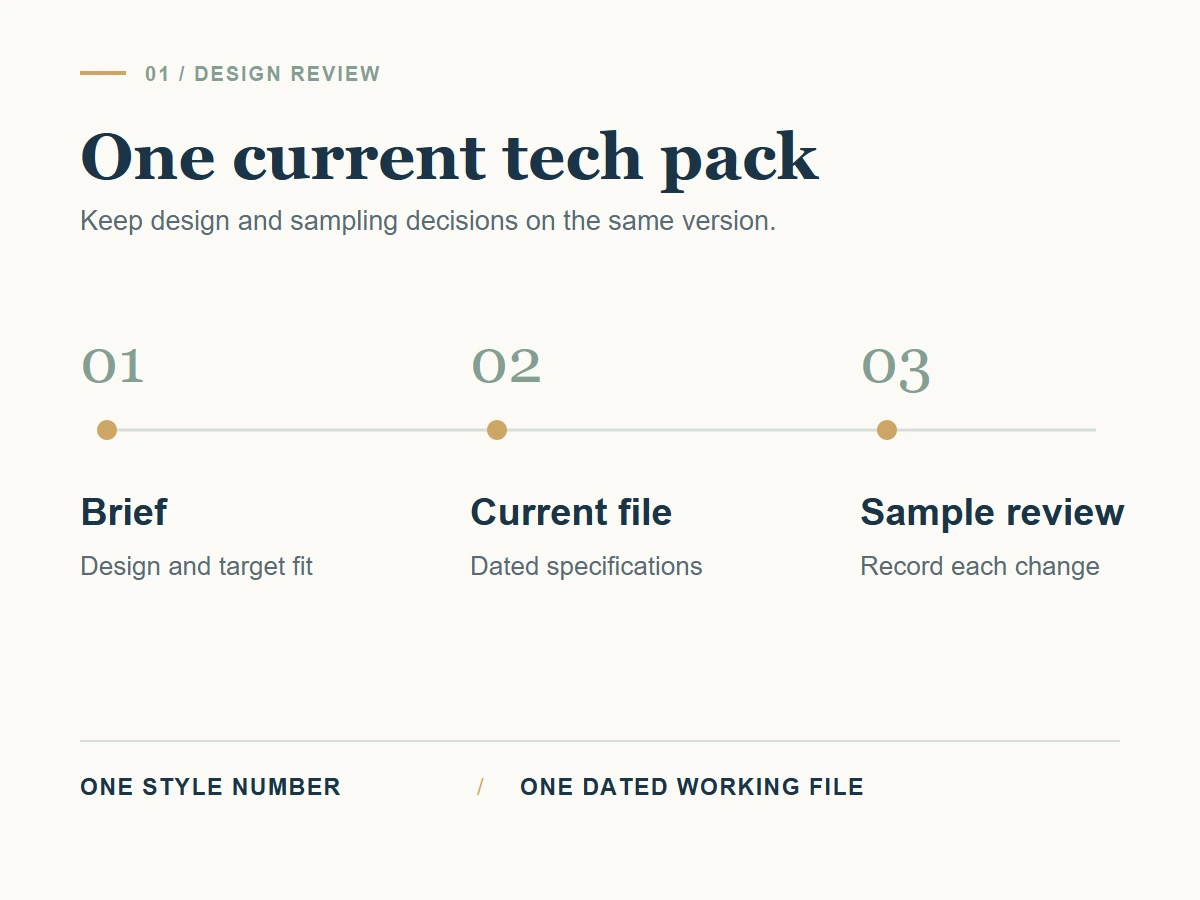
A tech pack is the instruction set an OEM production team uses to make a garment. It usually includes drawings, measurements, fabric details, colors, and branding. It doesn’t need to look complicated, but everyone should be working from the same current version.
For each style, prepare or discuss:
- Front and back sketches, plus photos or a reference garment if you have one.
- Target age group, size range, measurements, and how you want the garment to fit.
- Fabric, colors, trims, prints or embroidery, and fastening details.
- Labels, hang tags, packaging, and intended market.
- Expected quantities and the date you need the stock at your warehouse.
Don’t have a finished tech pack? You can still begin the conversation. Ask the manufacturer to help identify what is missing. Before sampling is approved, however, the fabric, dimensions, and construction must be clear enough that both sides know what they are checking.
Our suggestion is to use one style number and one dated working file. If you change the neckline on Tuesday, the sample team should not still be using Monday’s drawing. A short, updated file is more useful than several long email threads.
Step 2: Choose Fabrics, Trims, and Construction
A material that looks and feels good on a small swatch may behave differently once it has been sewn into a garment. Stretch, thickness, shrinkage, and seam construction can all change how the finished piece fits or feels against a child’s skin.
When choosing materials, check the details that affect the final garment:
- Fabric: Fiber content, weight, stretch, texture, color, wash behavior, and availability.
- Closures and trims: Buttons, snaps, zippers, elastic, rib cuffs, and how they are attached.
- Decoration: Print or embroidery placement, texture, and the finish on the inside.
- Brand details: Labels, care instructions, hang tags, and packaging.
We suggest checking fabric as part of the sewn garment, not only as a color swatch. A ribbed neckline can look neat on the table but feel too tight when a child pulls it on. Similarly, a decorative patch can look attractive from the outside while its backing feels rough against the skin. Our kids’ clothing fabric guide goes deeper into material choices.
If the sampling team uses a temporary fabric, note it clearly. Before bulk production, confirm that the actual production fabric has been reviewed too. The right color alone doesn’t guarantee the same stretch or washing result.
Step 3: Compare Quotes and Confirm Order Terms
Once the style and material direction are clear, ask each shortlisted factory to quote the same garment with the same requirements. Otherwise, a lower price may simply mean the supplier has left out an important part of the job.
A useful quotation should make the following easy to understand:
| Cost or condition | What to confirm |
|---|---|
| Product development | Are patterns, grading, samples, revisions, and sample shipping included? |
| Minimum order quantity (MOQ) | Is the minimum per style, color, fabric, or the entire order? Can sizes be mixed? |
| Garment price | Which fabric, trims, printing, embroidery, labels, and packing are included? |
| Testing and quality checks | Who arranges any required tests and inspections, and who pays for them? |
| Delivery and payment | What is the shipping responsibility, payment schedule, and starting point for lead time? |
We recommend comparing the total amount you need to commit, not just the price of one piece. A cheaper unit price may require buying more fabric or colors than your first collection can sell. If the approved fabric or decoration changes during sampling, get an updated written quote before production.
Also clarify where the garments will be cut and sewn, particularly if country of origin is part of your brand story. A U.S. office or showroom is not, by itself, proof of U.S. manufacture. If you’re still choosing a partner, our guide to selecting a kids’ clothing manufacturer can help you compare services and responsibilities.
Step 4: Make and Revise the Samples
The first sample shows how the manufacturer has understood your design. Its job is to reveal what works and what needs changing—it is not necessarily the version that will go into production.
Try the sample on an appropriate fit model or form when possible. Compare it with your measurements and inspect the details children will actually use: neck openings, waistbands, cuffs, seams, fasteners, and any decoration touching the skin. If the item will be machine washed, check the sample after following the proposed care instructions and note any changes that matter.
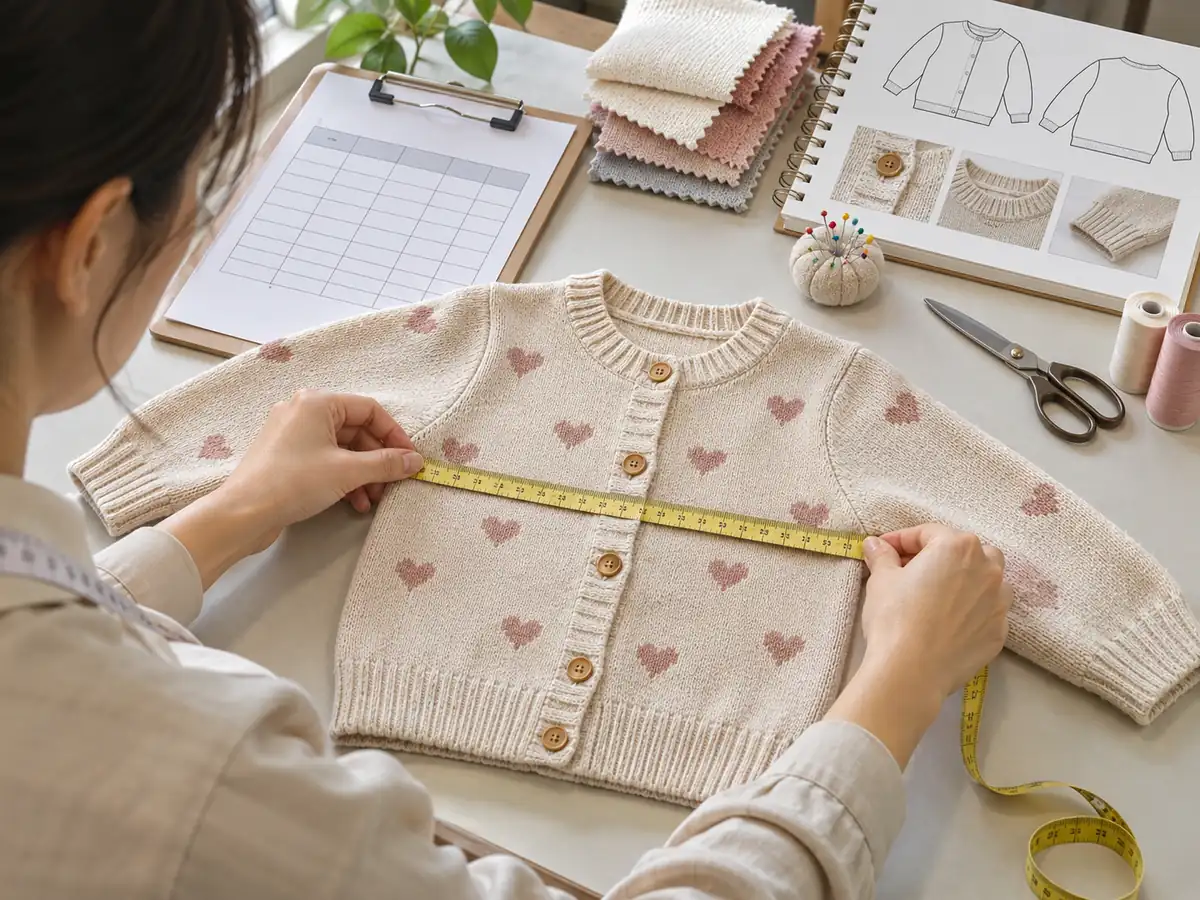
Keep revisions simple and specific:
- Identify the sample’s style, size, and version.
- Mark each change on a photo or measurement chart.
- Check whether the change affects fabric use, cost, or timing.
- Update the tech pack and review the next sample against that version.
“Make the neckline more comfortable” leaves room for different interpretations. A marked measurement, a photo, and an agreed revised opening are easier to reproduce. We prefer resolving these small fit details during sampling rather than discovering them once the fabric has been cut for the full order.
Step 5: Check Sizes and U.S. Product Requirements
A well-fitting sample in one size does not prove that every size will fit. The pattern needs to be adjusted for the intended size range—a process called grading—and selected sizes should be checked again.
Look at the smallest and largest sizes as well as the base size. Pay attention to changing body proportions, neck openings, sleeve and leg lengths, rise, and where pockets or graphics sit. If your range crosses from toddler sizes into older children’s sizes, don’t assume a simple increase in width and length will work.
Before approving the range, confirm the measurements, any agreed tolerances, and which physical sizes were checked. Make sure the design still meets the requirements for its intended market and product category. U.S. children’s sleepwear and everyday clothing are not necessarily assessed under the same rules; product-specific testing and labeling plans should be agreed before bulk production.
For covered U.S. children’s products, the CPSC’s Children’s Product Certificate (CPC) guidance explains certification responsibility and applicable testing. The domestic manufacturer or importer—not the test laboratory—issues the certificate where required. For imported regulated products, also coordinate applicable certificate eFiling with your importer or customs broker. Our U.S. kidswear compliance guide covers the broader requirements.
Step 6: Approve the Pre-Production Sample
Before bulk cutting begins, review a pre-production (PP) sample—the final sample that represents what the factory intends to make. It should match the approved design, size specifications, actual production fabric, trims, prints, and labels.
Check the PP sample against the latest tech pack and the purchase order. Even a correct sample can lead to the wrong delivery if the order lists an outdated color or size breakdown. We recommend confirming these items together:
- Approved sample and current file version.
- Final fabric, trims, colors, artwork, and labels.
- Measurements and size range, including acceptable variation.
- Quantity by style, color, and size.
- Testing status, inspection points, packaging, and delivery terms.
If the final production material isn’t the same as the sample material, approve the difference before cutting. The key question is: Could the factory make the entire order using only this approved sample and its documents? If the answer is no, something still needs clarifying.
Step 7: Produce, Inspect, and Pack the Bulk Order
An OEM production run should follow the approved PP sample and documents. Before cutting, confirm that the fabric and trims received for the order match the agreed materials. During sewing, check early garments for measurements, workmanship, and decoration placement, so problems can be addressed before the full order is finished.
Quality control should be more than a final glance at a few cartons. Agree with the factory on what will be checked, when it will be checked, and what happens if something fails. Depending on the style, checks may cover seams, closures, garment measurements, labels, print position, quantities, and packing.
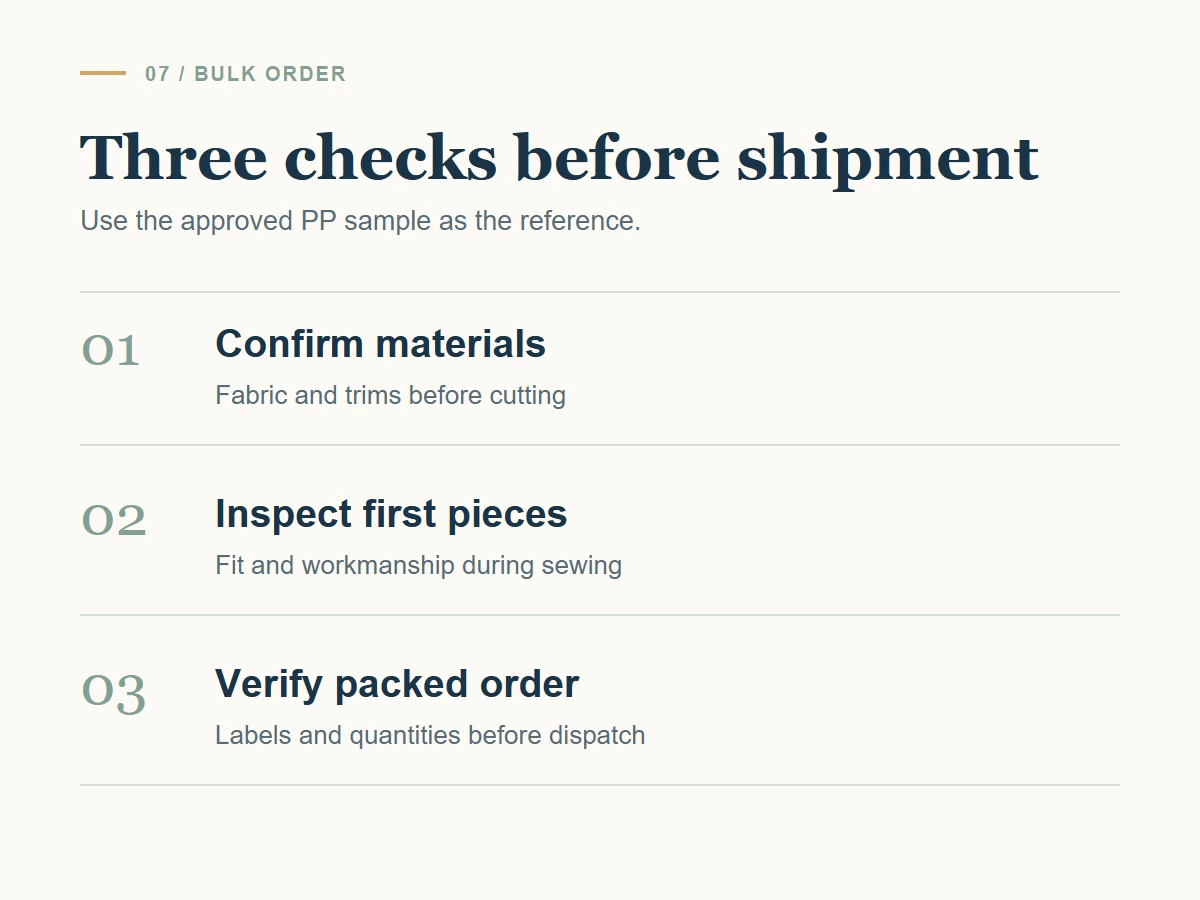
Before shipment, request the final size and color breakdown, inspection results, any approved changes or repairs, and the packing list. When the order arrives, compare the received cartons and a selection of garments with those records. The approved sample sets the target; inspection tells you whether the actual order meets it.
Who Approves What During OEM Production?
The factory may suggest technical changes, but your brand should know which choices need its approval. You don’t need to manage every stitch; you do need one clear record of the decisions that affect your product.
| Stage | Factory provides | Brand approves |
|---|---|---|
| Design review | Questions and a workable product brief | Design direction, target sizes, and open decisions |
| Material selection | Fabric, trim, color, and decoration options | Materials and visible design details |
| Sample development | Physical samples and proposed corrections | Fit, construction, and sample changes |
| Size review | Graded measurements and selected size samples | Size range and agreed fit |
| Production release | PP sample, final files, and purchase-order details | The version the factory may produce |
| Final checks | Inspection results and packing details | Resolution of issues and order handover |
One practical habit helps throughout: put sample photos, measurements, approvals, and changes under the same style number. That makes it easier to answer a question later without searching through different chat threads. Compliance responsibilities must also be agreed separately; an internal approval table does not replace the legal duties of the responsible manufacturer or importer.
How Long Does Children’s Clothing OEM Production Take?
There is no reliable single lead time for every kidswear order. A simple T-shirt using available fabric and a custom dress with special trims can follow very different schedules. The useful question is not just “How many weeks?” but “Which approvals and materials must be ready before the clock starts?”
Ask your manufacturer to break the schedule into four stages:
- Development: Tech pack review, materials, patterns, and sample revisions.
- Final approval: Size checks, required testing, and PP sample sign-off.
- Bulk production: Material arrival, cutting, sewing, finishing, and inspection.
- Delivery: Packing, shipping, customs where applicable, and warehouse receiving.
Work backward from the date you need inventory at your warehouse—not the day you want the factory to finish sewing. Confirm when quoted lead time starts, which tasks can run together, and what happens if a fabric is delayed or a sample needs another revision. A written milestone plan is more dependable than a general promise of a fast turnaround.
Common OEM Production Mistakes to Avoid
Most avoidable problems begin when two people believe they approved the same garment but are looking at different versions. Before production starts, check these common gaps:
| Common mistake | Better approach |
|---|---|
| Quoting from a photo without material and size details | Ask for a quotation tied to one written product specification |
| Approving a sample made with temporary fabric | Confirm the actual bulk fabric and final PP sample separately |
| Checking only the middle size | Review the graded chart and selected small and large sizes |
| Changing trims or measurements after approval | Document the change and review effects on price, tests, and timing |
| Treating factory completion as the arrival date | Plan inspection, packing, transport, and warehouse receiving |
Our advice for a first collection is to get a few core styles right before adding more variations. Each new fabric, color, or trim creates another detail to approve and another potential source of delay. Start with the pieces you are most confident about, then build on the information you learn from those first orders.
If you have a sketch, tech pack, or reference garment, you can share your collection brief with Shimmerella. Include your target age range, quantities, fabric ideas, branding, destination market, and required arrival date. We can help you identify the decisions needed to move from design to sampling and production.
Frequently Asked Questions
These answers cover the questions brands most often need to settle before committing to a custom kidswear order.
1. Do I need a complete tech pack to start OEM production?
No. You can begin with a sketch, a reference garment, or a clear idea of what you want to make. The factory may help develop the missing specifications. Before bulk production, however, the fabrics, measurements, design details, labels, and approved sample must be documented.
2. What is the difference between OEM and ODM kidswear manufacturing?
With OEM, you bring the design and the factory makes it to the agreed specification. With ODM, the supplier is more involved in designing or developing the style. Both can include custom branding. Ask who handles patterns, fabric decisions, sample changes, and ownership of the final files.
3. What is the MOQ for children’s clothing OEM production?
MOQ means the minimum number of pieces a manufacturer will accept. It may be counted per style, color, fabric, or entire order. Shimmerella currently lists a starting MOQ of 300 pieces, with the actual minimum depending on the garment, materials, colors, and size mix. Confirm how your particular order is counted before comparing quotes.
4. Can I mix different sizes and colors in one OEM order?
Often, yes, but the rules vary by supplier. Ask whether sizes can be mixed within one style and whether each color or fabric must meet a separate minimum. Send a size-and-color breakdown so the factory can confirm the total quantity, material availability, and price.
5. How long does children’s clothing OEM production take?
It depends on the design, fabric availability, sample revisions, testing, production schedule, and shipping method. Ask for separate estimates for development, PP sample approval, bulk production, and delivery. Check whether the quoted period begins when you pay a deposit or only after the final sample is approved.
6. When is the final production price confirmed?
The most reliable price comes after the style, fabrics, sizes, quantity, decoration, testing requirements, and packaging are agreed. An early quote may use estimates. If sampling changes the fabric or construction, request a revised written quote before authorizing bulk production.
7. Who is responsible for U.S. testing and the CPC?
The factory can help arrange testing and provide records, but the responsible U.S. domestic manufacturer or importer issues the CPC for covered products. Testing must address the applicable requirements, with any relevant exceptions evaluated. Agree in writing on who handles testing, reports, labeling information, and certificate preparation.
8. Does an approved sample guarantee the quality of the bulk order?
No. It establishes the standard the factory should follow. The materials received for bulk, first production garments, measurements, workmanship, labels, and packing still need checks. A strong approval process connects the final sample, purchase order, and inspection plan to the same version.